

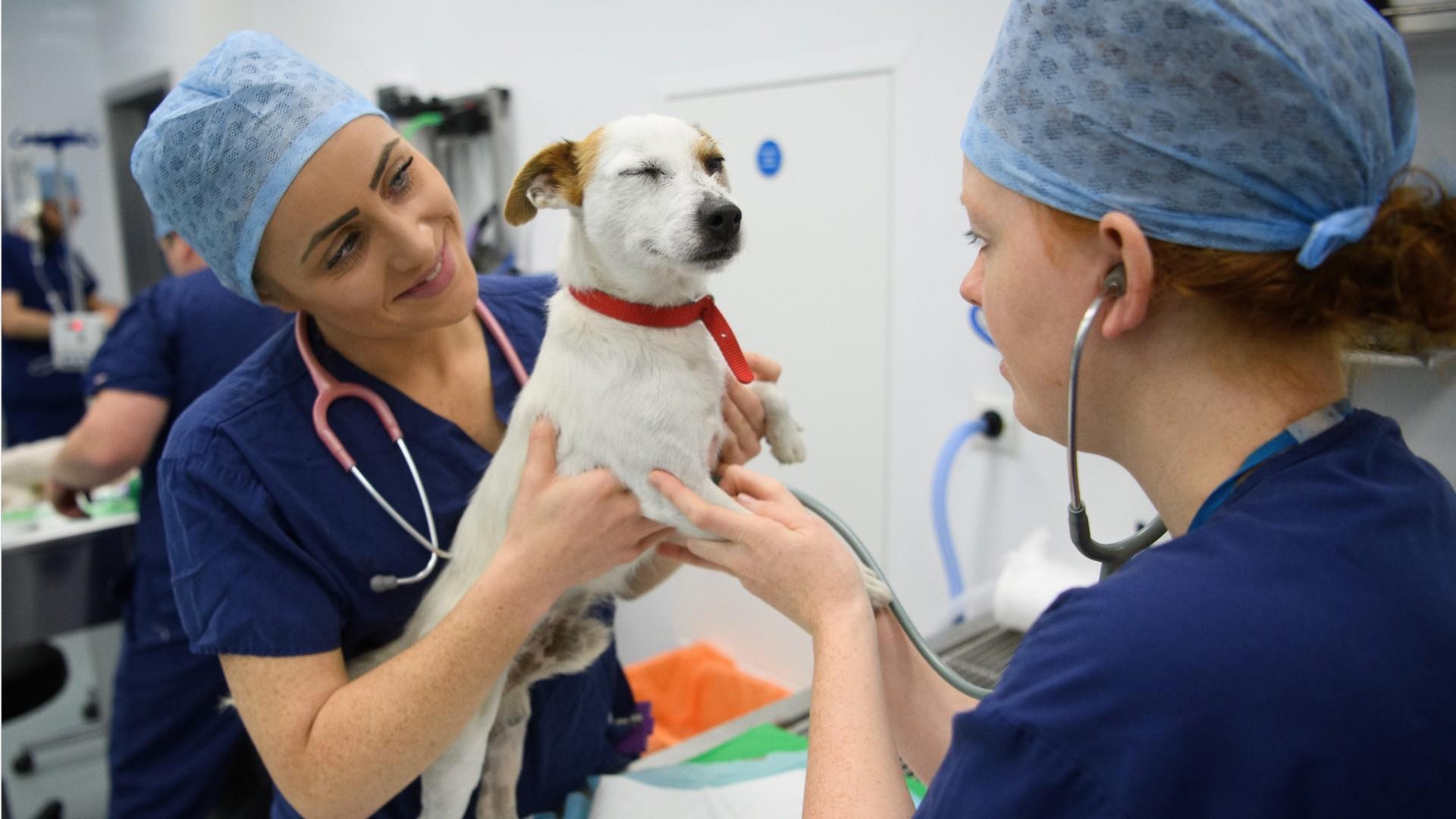
Veterinary Technologists and Technicians
Perform medical tests in a laboratory environment for use in the treatment and diagnosis of diseases in animals. Prepare vaccines and serums for prevention of diseases. Prepare tissue samples, take blood samples, and execute laboratory tests, such as urinalysis and blood counts. Clean and sterilize instruments and materials and maintain equipment and machines. May assist a veterinarian during surgery.
What is this job like?
- Prepare animals for surgery, performing such tasks as shaving surgical areas.
- Take animals into treatment areas and assist with physical examinations by performing such duties as obtaining temperature, pulse, or respiration data.
- Clean kennels, animal holding areas, surgery suites, examination rooms, or animal loading or unloading facilities to control the spread of disease.
- Maintain laboratory, research, or treatment records, as well as inventories of pharmaceuticals, equipment, or supplies.
- Prepare and administer medications, vaccines, serums, or treatments, as prescribed by veterinarians.
- Take and develop diagnostic radiographs, using x-ray equipment.
- Perform a variety of office, clerical, or accounting duties, such as reception, billing, bookkeeping, or selling products.
- Administer emergency first aid, such as performing emergency resuscitation or other life saving procedures.
- Maintain instruments, equipment, or machinery to ensure proper working condition.
- Monitor medical supplies and place orders when inventory is low.
- Take and develop diagnostic radiographs, using x-ray equipment.
- Provide assistance with animal euthanasia and the disposal of remains.
- Collect, prepare, and label samples for laboratory testing, culture, or microscopic examination.
- Provide veterinarians with the correct equipment or instruments, as needed.
- Administer anesthesia to animals, under the direction of a veterinarian, and monitor animals' responses to anesthetics so that dosages can be adjusted.
- Prepare and administer medications, vaccines, serums, or treatments, as prescribed by veterinarians.
- Maintain controlled drug inventory and related log books.
- Administer anesthesia to animals, under the direction of a veterinarian, and monitor animals' responses to anesthetics so that dosages can be adjusted.
- Discuss medical health of pets with clients, such as post-operative status.
- Bathe animals, clip nails or claws, and brush or cut animals' hair.
- Supervise or train veterinary students or other staff members.
- Clean and sterilize instruments, equipment, or materials.
- Care for and monitor the condition of animals recovering from surgery.
- Fill prescriptions, measuring medications and labeling containers.
- Observe the behavior and condition of animals and monitor their clinical symptoms.
- Collect, prepare, and label samples for laboratory testing, culture, or microscopic examination.
- Supervise or train veterinary students or other staff members.
- Clean and sterilize instruments, equipment, or materials.
- Perform laboratory tests on blood, urine, or feces, such as urinalyses or blood counts, to assist in the diagnosis and treatment of animal health problems.
- Restrain animals during exams or procedures.
- Perform a variety of office, clerical, or accounting duties, such as reception, billing, bookkeeping, or selling products.
- Schedule appointments and procedures for animals.
- Monitor medical supplies and place orders when inventory is low.
- Give enemas and perform catheterizations, ear flushes, intravenous feedings, or gavages.
- Provide information or counseling regarding issues such as animal health care, behavior problems, or nutrition.
- Perform dental work, such as cleaning, polishing, or extracting teeth.
- Conduct specialized procedures, such as animal branding or tattooing or hoof trimming.
- Perform a variety of office, clerical, or accounting duties, such as reception, billing, bookkeeping, or selling products.
- Prepare treatment rooms for surgery.
- Dress and suture wounds and apply splints or other protective devices.
- Prepare and administer medications, vaccines, serums, or treatments, as prescribed by veterinarians.
Local Wage Data
Showing wage data for: New Orleans
Entry
Median
High
Salary
Hourly Wage
$29,000
$38,240
$54,680
$13.94
$18.38
$26.29