

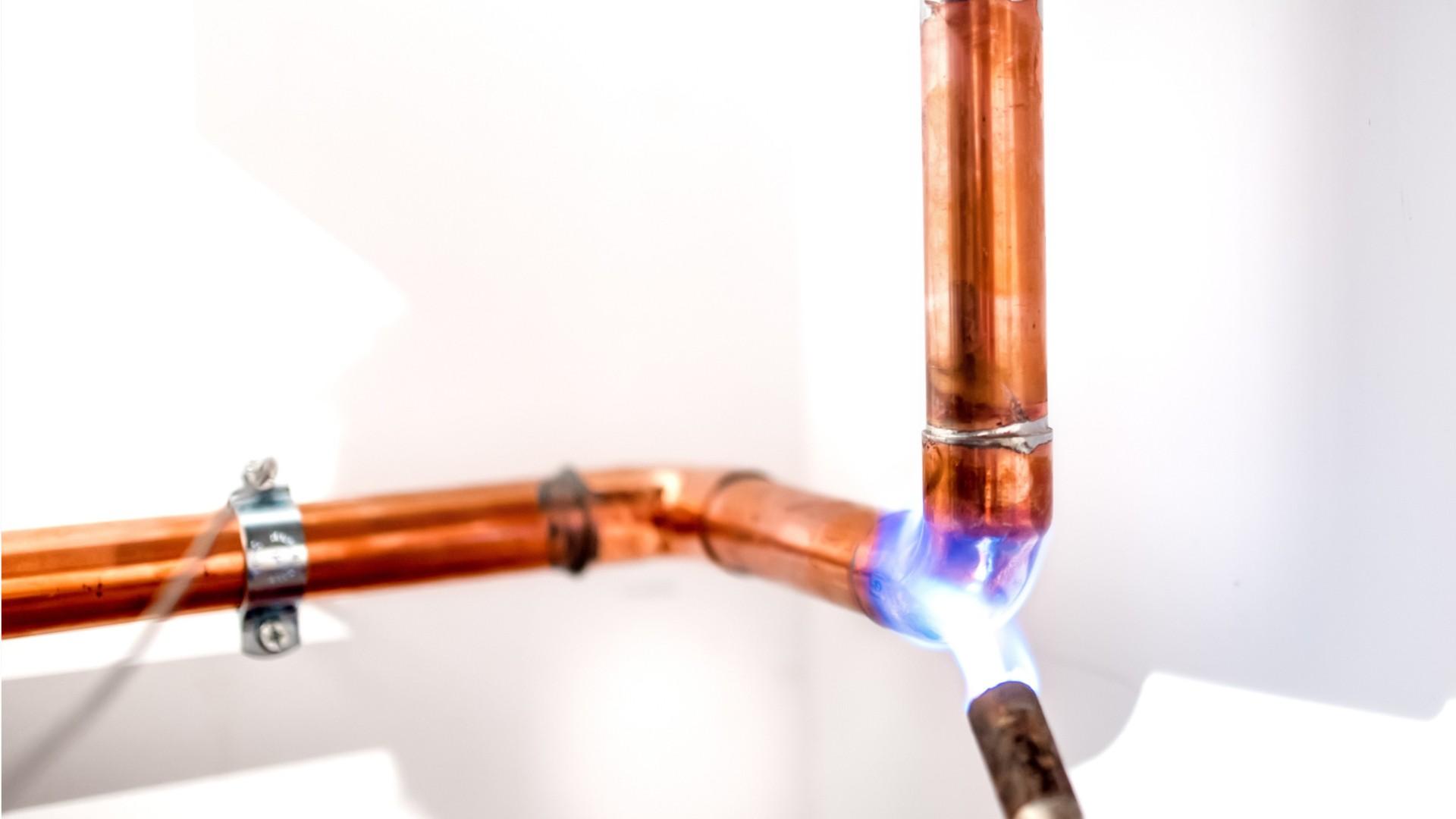
Plumbers, Pipefitters, and Steamfitters
Assemble, install, alter, and repair pipelines or pipe systems that carry water, steam, air, or other liquids or gases. May install heating and cooling equipment and mechanical control systems. Includes sprinkler fitters.
What is this job like?
- Modify, clean, or maintain pipe systems, units, fittings, or related machines or equipment, using hand or power tools.
- Anchor steel supports from ceiling joists to hold pipes in place.
- Review blueprints, building codes, or specifications to determine work details or procedures.
- Install automatic controls to regulate pipe systems.
- Fill pipes or plumbing fixtures with water or air and observe pressure gauges to detect and locate leaks.
- Cut, thread, or hammer pipes to specifications, using tools such as saws, cutting torches, pipe threaders, or pipe benders.
- Assemble pipe sections, tubing, or fittings, using couplings, clamps, screws, bolts, cement, plastic solvent, caulking, or soldering, brazing, or welding equipment.
- Direct helpers engaged in pipe cutting, preassembly, or installation of plumbing systems or components.
- Assemble pipe sections, tubing, or fittings, using couplings, clamps, screws, bolts, cement, plastic solvent, caulking, or soldering, brazing, or welding equipment.
- Attach pipes to walls, structures, or fixtures, such as radiators or tanks, using brackets, clamps, tools, or welding equipment.
- Lay out full scale drawings of pipe systems, supports, or related equipment, according to blueprints.
- Attach pipes to walls, structures, or fixtures, such as radiators or tanks, using brackets, clamps, tools, or welding equipment.
- Install pipe assemblies, fittings, valves, appliances such as dishwashers or water heaters, or fixtures such as sinks or toilets, using hand or power tools.
- Keep records of work assignments.
- Install pipe systems to support alternative energy-fueled systems, such as geothermal heating or cooling systems.
- Cut openings in structures to accommodate pipes or pipe fittings, using hand or power tools.
- Plan pipe system layout, installation, or repair, according to specifications.
- Cut, thread, or hammer pipes to specifications, using tools such as saws, cutting torches, pipe threaders, or pipe benders.
- Shut off steam, water, or other gases or liquids from pipe sections, using valve keys or wrenches.
- Estimate time, material, or labor costs for use in project plans.
- Estimate time, material, or labor costs for use in project plans.
- Locate and mark the position of pipe installations, connections, passage holes, or fixtures in structures, using measuring instruments such as rulers or levels.
- Install green plumbing equipment, such as faucet flow restrictors, dual-flush or pressure-assisted flush toilets, or tankless hot water heaters.
- Install underground storm, sanitary, or water piping systems, extending piping as needed to connect fixtures and plumbing.
- Install fixtures, appliances, or equipment designed to reduce water or energy consumption.
- Weld small pipes or special piping, using specialized techniques, equipment, or materials, such as computer-assisted welding or microchip fabrication.
- Operate motorized pumps to remove water from flooded manholes, basements, or facility floors.
- Locate and mark the position of pipe installations, connections, passage holes, or fixtures in structures, using measuring instruments such as rulers or levels.
- Inspect structures to assess material or equipment needs, to establish the sequence of pipe installations, or to plan installation around obstructions, such as electrical wiring.
- Inspect, examine, or test installed systems or pipe lines, using pressure gauge, hydrostatic testing, observation, or other methods.
- Select pipe sizes, types, or related materials, such as supports, hangers, or hydraulic cylinders, according to specifications.
- Inspect work sites for obstructions or holes that could cause structural weakness.
- Maintain or repair plumbing by replacing defective washers, replacing or mending broken pipes, or opening clogged drains.
- Modify, clean, or maintain pipe systems, units, fittings, or related machines or equipment, using hand or power tools.
Local Wage Data
Showing wage data for: New Orleans
Entry
Median
High
Salary
Hourly Wage
$36,770
$59,380
$77,890
$17.68
$28.55
$37.45