

Electricians
Install, maintain, and repair electrical wiring, equipment, and fixtures. Ensure that work is in accordance with relevant codes. May install or service street lights, intercom systems, or electrical control systems.
What is this job like?
- Diagnose malfunctioning systems, apparatus, or components, using test equipment and hand tools to locate the cause of a breakdown and correct the problem.
- Perform business management duties, such as maintaining records or files, preparing reports, or ordering supplies or equipment.
- Construct or fabricate parts, using hand tools, according to specifications.
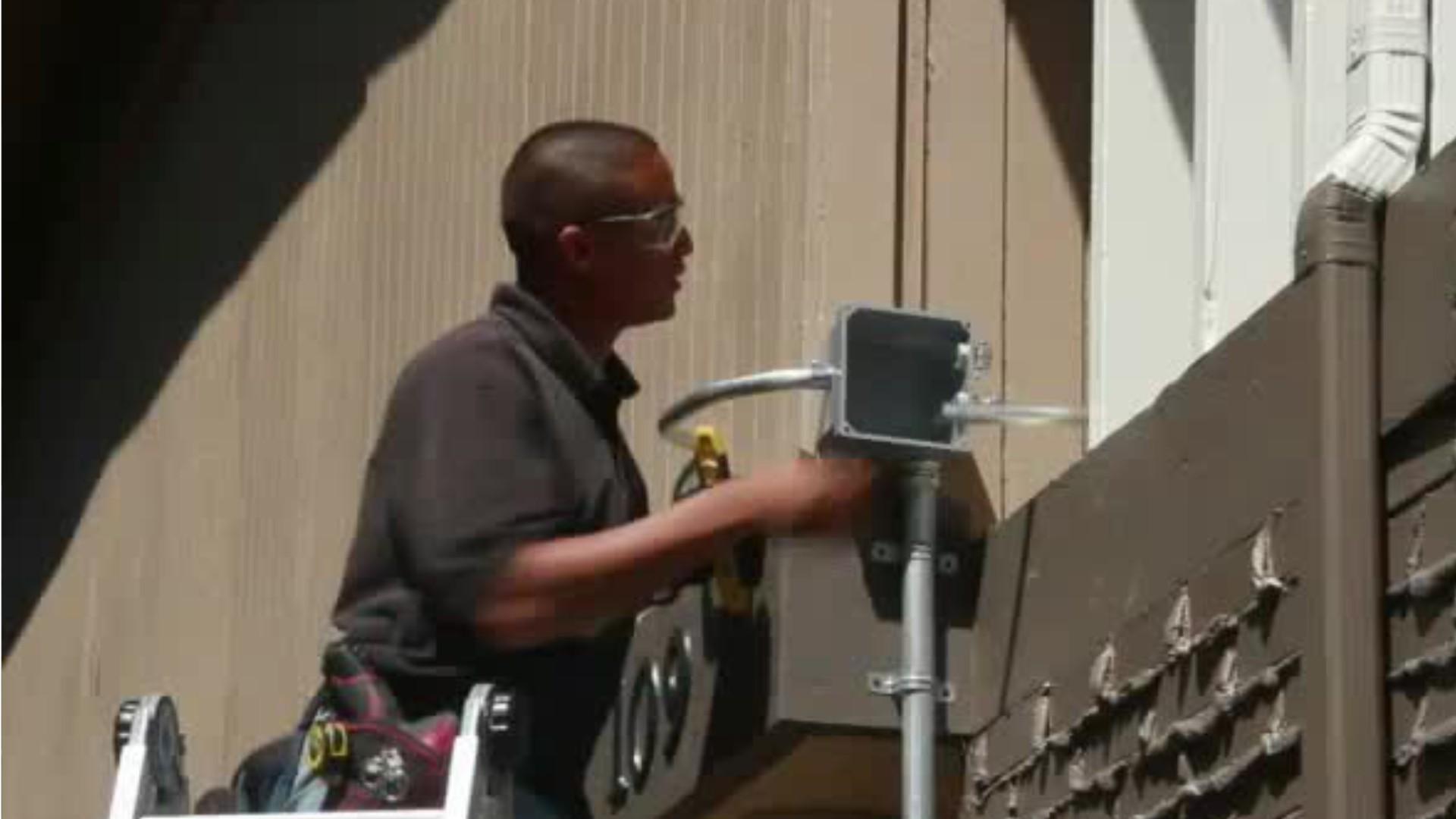
- Work from ladders, scaffolds, or roofs to install, maintain, or repair electrical wiring, equipment, or fixtures.
- Repair or replace wiring, equipment, or fixtures, using hand tools or power tools.
- Install ground leads and connect power cables to equipment, such as motors.
- Provide assistance during emergencies by operating floodlights or generators, placing flares, or driving needed vehicles.
- Perform business management duties, such as maintaining records or files, preparing reports, or ordering supplies or equipment.
- Use a variety of tools or equipment, such as power construction equipment, measuring devices, power tools, and testing equipment, such as oscilloscopes, ammeters, or test lamps.
- Place conduit, pipes, or tubing, inside designated partitions, walls, or other concealed areas, and pull insulated wires or cables through the conduit to complete circuits between boxes.
- Inspect electrical systems, equipment, or components to identify hazards, defects, or the need for adjustment or repair, and to ensure compliance with codes.
- Maintain current electrician's license or identification card to meet governmental regulations.
- Direct or train workers to install, maintain, or repair electrical wiring, equipment, or fixtures.
- Direct or train workers to install, maintain, or repair electrical wiring, equipment, or fixtures.
- Provide preliminary sketches or cost estimates for materials or services.
- Plan layout and installation of electrical wiring, equipment, or fixtures, based on job specifications and local codes.
- Fasten small metal or plastic boxes to walls to house electrical switches or outlets.
- Assemble, install, test, or maintain electrical or electronic wiring, equipment, appliances, apparatus, or fixtures, using hand tools or power tools.
- Perform physically demanding tasks, such as digging trenches to lay conduit or moving or lifting heavy objects.
- Assemble, install, test, or maintain electrical or electronic wiring, equipment, appliances, apparatus, or fixtures, using hand tools or power tools.
- Test electrical systems or continuity of circuits in electrical wiring, equipment, or fixtures, using testing devices, such as ohmmeters, voltmeters, or oscilloscopes, to ensure compatibility and safety of system.
- Prepare sketches or follow blueprints to determine the location of wiring or equipment and to ensure conformance to building and safety codes.
- Advise management on whether continued operation of equipment could be hazardous.
- Connect wires to circuit breakers, transformers, or other components.
- Assemble, install, test, or maintain electrical or electronic wiring, equipment, appliances, apparatus, or fixtures, using hand tools or power tools.
- Provide preliminary sketches or cost estimates for materials or services.
Local Wage Data
Showing wage data for: New Orleans
Entry
Median
High
Salary
Hourly Wage
$36,900
$50,100
$78,030
$17.74
$24.09
$37.52