

Electrical Power-Line Installers and Repairers
Install or repair cables or wires used in electrical power or distribution systems. May erect poles and light or heavy duty transmission towers.
What is this job like?
- Clean, tin, and splice corresponding conductors by twisting ends together or by joining ends with metal clamps and soldering connections.
- Install, maintain, and repair electrical distribution and transmission systems, including conduits, cables, wires, and related equipment, such as transformers, circuit breakers, and switches.
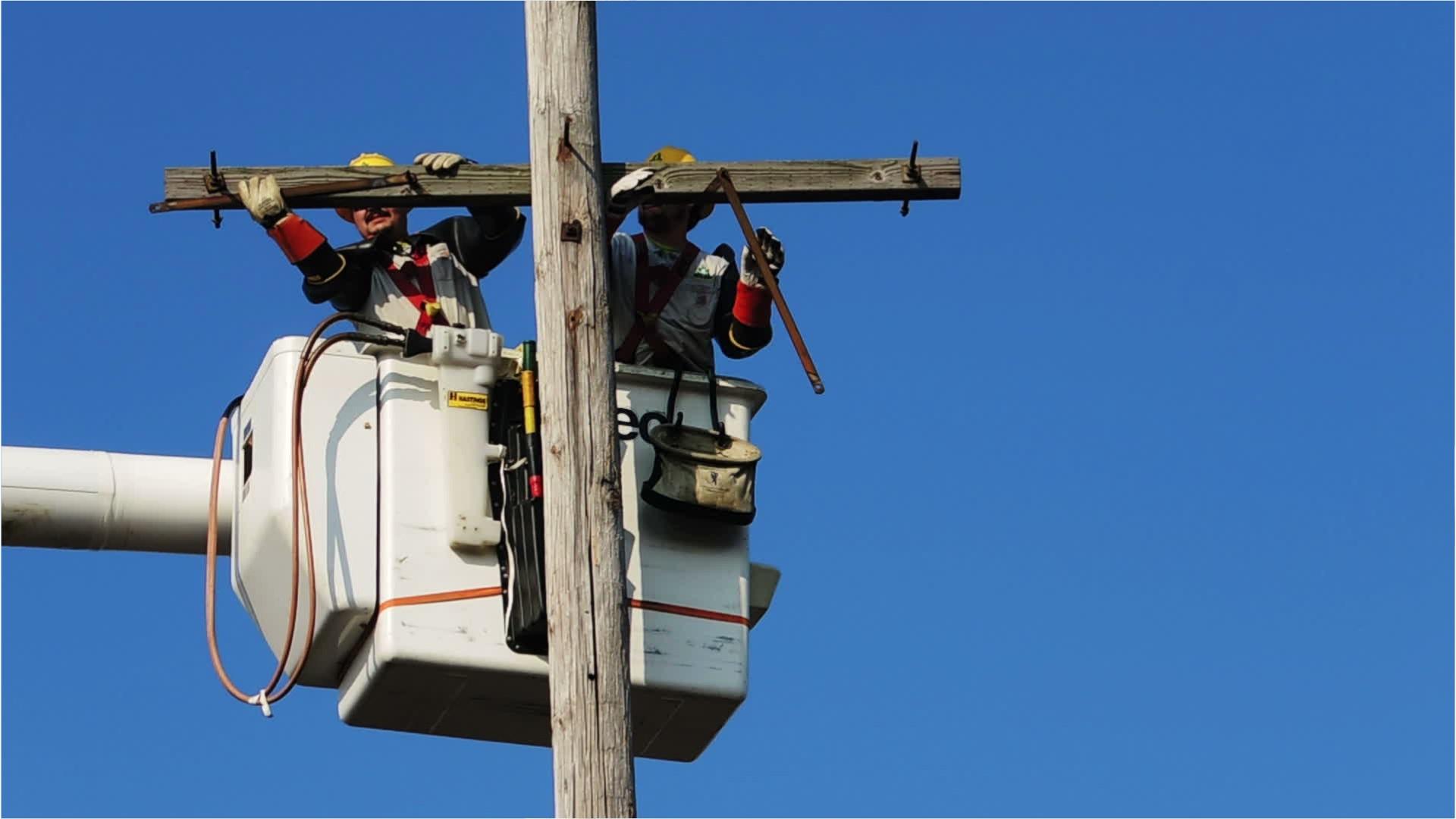
- Climb poles or use truck-mounted buckets to access equipment.
- Travel in trucks, helicopters, and airplanes to inspect lines for freedom from obstruction and adequacy of insulation.
- Attach cross-arms, insulators, and auxiliary equipment to poles prior to installing them.
- Dig holes, using augers, and set poles, using cranes and power equipment.
- Coordinate work assignment preparation and completion with other workers.
- Replace or straighten damaged poles.
- Inspect and test power lines and auxiliary equipment to locate and identify problems, using reading and testing instruments.
- Install, maintain, and repair electrical distribution and transmission systems, including conduits, cables, wires, and related equipment, such as transformers, circuit breakers, and switches.
- Drive vehicles equipped with tools and materials to job sites.
- Splice or solder cables together or to overhead transmission lines, customer service lines, or street light lines, using hand tools, epoxies, or specialized equipment.
- String wire conductors and cables between poles, towers, trenches, pylons, and buildings, setting lines in place and using winches to adjust tension.
- Test conductors, according to electrical diagrams and specifications, to identify corresponding conductors and to prevent incorrect connections.
- Dig holes, using augers, and set poles, using cranes and power equipment.
- Place insulating or fireproofing materials over conductors and joints.
- Splice or solder cables together or to overhead transmission lines, customer service lines, or street light lines, using hand tools, epoxies, or specialized equipment.
- Clean, tin, and splice corresponding conductors by twisting ends together or by joining ends with metal clamps and soldering connections.
- Install watt-hour meters and connect service drops between power lines and consumers' facilities.
- Inspect and test power lines and auxiliary equipment to locate and identify problems, using reading and testing instruments.
- Identify defective sectionalizing devices, circuit breakers, fuses, voltage regulators, transformers, switches, relays, or wiring, using wiring diagrams and electrical-testing instruments.
- Open switches or attach grounding devices to remove electrical hazards from disturbed or fallen lines or to facilitate repairs.
- Cut and peel lead sheathing and insulation from defective or newly installed cables and conduits prior to splicing.
- Install watt-hour meters and connect service drops between power lines and consumers' facilities.
- Lay underground cable directly in trenches, or string it through conduit running through the trenches.
- Trim trees that could be hazardous to the functioning of cables or wires.
- Cut trenches for laying underground cables, using trenchers and cable plows.
- Pull up cable by hand from large reels mounted on trucks.
- Adhere to safety practices and procedures, such as checking equipment regularly and erecting barriers around work areas.
Local Wage Data
Showing wage data for: New Orleans
Entry
Median
High
Salary
Hourly Wage
$47,070
$82,340
$114,590
$22.63
$39.59
$55.09