

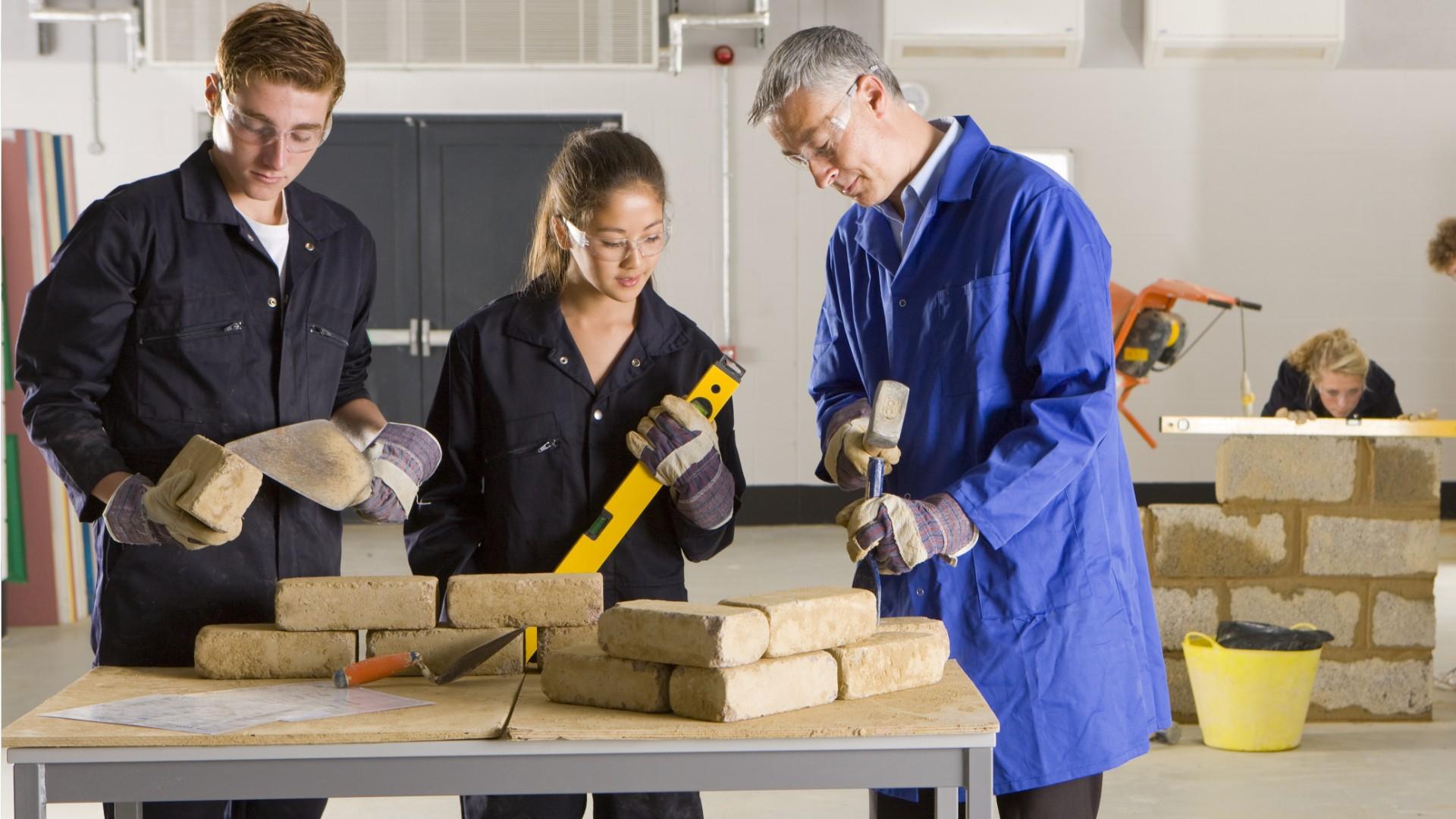
Career/Technical Education Teachers, Secondary School
Teach occupational, vocational, career, or technical subjects to students at the secondary school level.
What is this job like?
- Confer with other staff members to plan and schedule lessons promoting learning, following approved curricula.
- Attend staff meetings and serve on committees, as required.
- Plan and supervise class projects, field trips, visits by guest speakers or other experiential activities, and guide students in learning from those activities.
- Select, order, store, issue, and inventory classroom equipment, materials, and supplies.
- Prepare, administer, and grade tests and assignments to evaluate students' progress.
- Plan and supervise work-experience programs in businesses, industrial shops, and school laboratories.
- Select, order, store, issue, and inventory classroom equipment, materials, and supplies.
- Prepare students for later grades by encouraging them to explore learning opportunities and to persevere with challenging tasks.
- Confer with parents or guardians, other teachers, counselors, and administrators to resolve students' behavioral and academic problems.
- Maintain accurate and complete student records as required by law, district policy, and administrative regulations.
- Observe and evaluate students' performance, behavior, social development, and physical health.
- Attend professional meetings, educational conferences, and teacher training workshops to maintain and improve professional competence.
- Prepare reports on students and activities as required by administration.
- Prepare materials and classroom for class activities.
- Observe and evaluate students' performance, behavior, social development, and physical health.
- Establish clear objectives for all lessons, units, and projects and communicate those objectives to students.
- Prepare objectives and outlines for courses of study, following curriculum guidelines or requirements of states and schools.
- Assign and grade class work and homework.
- Use computers, audio-visual aids, and other equipment and materials to supplement presentations.
- Collaborate with other teachers and administrators in the development, evaluation, and revision of secondary school programs.
- Enforce all administration policies and rules governing students.
- Meet with other professionals to discuss individual students' needs and progress.
- Establish and enforce rules for behavior and procedures for maintaining order among students.
- Assign and grade class work and homework.
- Instruct and monitor students in the use and care of equipment and materials to prevent injury and damage.
- Place students in jobs or make referrals to job placement services.
- Select, order, store, issue, and inventory classroom equipment, materials, and supplies.
- Meet with parents and guardians to discuss their children's progress and to determine priorities for their children and their resource needs.
- Perform administrative duties, such as assisting in school libraries, hall and cafeteria monitoring, and bus loading and unloading.
- Prepare, administer, and grade tests and assignments to evaluate students' progress.
- Confer with parents or guardians, other teachers, counselors, and administrators to resolve students' behavioral and academic problems.
- Instruct students individually and in groups, using various teaching methods, such as lectures, discussions, and demonstrations.
- Prepare, administer, and grade tests and assignments to evaluate students' progress.
- Instruct students in the knowledge and skills required in a specific occupation or occupational field, using a systematic plan of lectures, discussions, audio-visual presentations, and laboratory, shop, and field studies.
- Guide and counsel students with adjustment or academic problems, or special academic interests.
- Plan and supervise work-experience programs in businesses, industrial shops, and school laboratories.
- Prepare and implement remedial programs for students requiring extra help.
- Instruct and monitor students in the use and care of equipment and materials to prevent injury and damage.
- Sponsor extracurricular activities, such as clubs, student organizations, and academic contests.
- Keep informed about trends in education and subject matter specialties.
- Provide disabled students with assistive devices, supportive technology, and assistance accessing facilities, such as restrooms.
- Observe and evaluate students' performance, behavior, social development, and physical health.
- Plan and conduct activities for a balanced program of instruction, demonstration, and work time that provides students with opportunities to observe, question, and investigate.
Local Wage Data
Showing wage data for: New Orleans
Entry
Median
High
Salary
Hourly Wage
$47,310
$59,620
$63,140
No data
No data
No data