

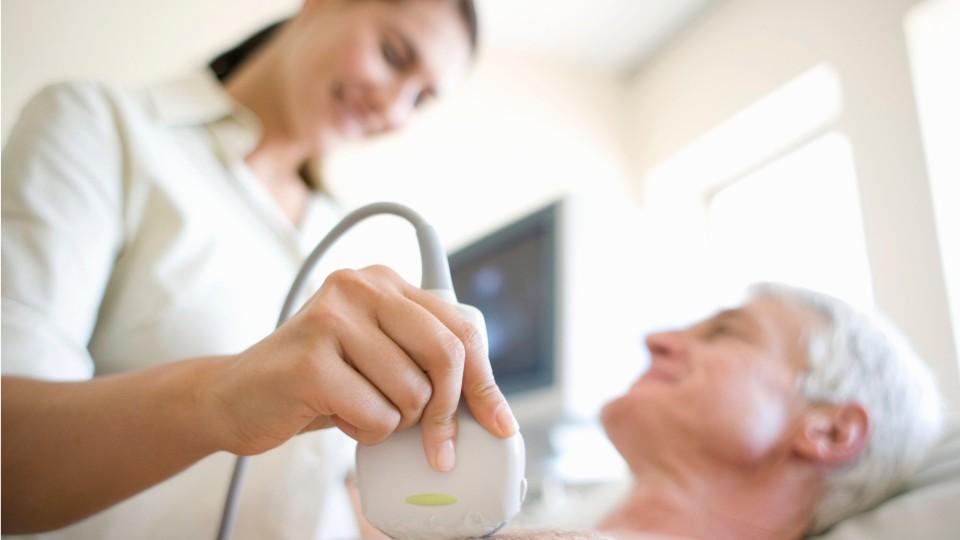
Cardiovascular Technologists and Technicians
Conduct tests on pulmonary or cardiovascular systems of patients for diagnostic, therapeutic, or research purposes. May conduct or assist in electrocardiograms, cardiac catheterizations, pulmonary functions, lung capacity, and similar tests.
What is this job like?
- Perform general administrative tasks, such as scheduling appointments or ordering supplies or equipment.
- Inject contrast medium into patients' blood vessels.
- Supervise or train other cardiology technologists or students.
- Conduct electrocardiogram (EKG), phonocardiogram, echocardiogram, stress testing, or other cardiovascular tests to record patients' cardiac activity, using specialized electronic test equipment, recording devices, or laboratory instruments.
- Obtain and record patient identification, medical history, or test results.
- Assist physicians in the diagnosis and treatment of cardiac or peripheral vascular treatments, such as implanting pacemakers or assisting with balloon angioplasties to treat blood vessel blockages.
- Conduct tests of pulmonary system, using spirometer or other respiratory testing equipment.
- Assist surgeons with vascular procedures, such as preparing balloons and stents.
- Prepare and position patients for testing.
- Check, test, and maintain cardiology equipment, making minor repairs when necessary, to ensure proper operation.
- Monitor patients' comfort and safety during tests, alerting physicians to abnormalities or changes in patient responses.
- Supervise or train other cardiology technologists or students.
- Explain testing procedures to patients to obtain cooperation and reduce anxiety.
- Attach electrodes to the patients' chests, arms, and legs, connect electrodes to leads from the electrocardiogram (EKG) machine, and operate the EKG machine to obtain a reading.
- Perform general administrative tasks, such as scheduling appointments or ordering supplies or equipment.
- Attach electrodes to the patients' chests, arms, and legs, connect electrodes to leads from the electrocardiogram (EKG) machine, and operate the EKG machine to obtain a reading.
- Enter factors, such as amount and quality of radiation beam, and filming sequence, into computer.
- Compare measurements of heart wall thickness and chamber sizes to standard norms to identify abnormalities.
- Observe ultrasound display screen and listen to signals to record vascular information, such as blood pressure, limb volume changes, oxygen saturation, or cerebral circulation.
- Check, test, and maintain cardiology equipment, making minor repairs when necessary, to ensure proper operation.
- Transcribe, type, and distribute reports of diagnostic procedures for interpretation by physician.
- Obtain and record patient identification, medical history, or test results.
- Conduct electrocardiogram (EKG), phonocardiogram, echocardiogram, stress testing, or other cardiovascular tests to record patients' cardiac activity, using specialized electronic test equipment, recording devices, or laboratory instruments.
- Operate diagnostic imaging equipment to produce contrast enhanced radiographs of heart and cardiovascular system.
- Check, test, and maintain cardiology equipment, making minor repairs when necessary, to ensure proper operation.
- Monitor patients' comfort and safety during tests, alerting physicians to abnormalities or changes in patient responses.
- Monitor patients' blood pressure and heart rate using electrocardiogram (EKG) equipment during diagnostic or therapeutic procedures to notify the physician if something appears wrong.
- Adjust equipment and controls according to physicians' orders or established protocol.
- Maintain a proper sterile field during surgical procedures.
- Transcribe, type, and distribute reports of diagnostic procedures for interpretation by physician.
- Set up 24-hour Holter and event monitors, scan and interpret tapes, and report results to physicians.
- Set up 24-hour Holter and event monitors, scan and interpret tapes, and report results to physicians.
- Set up 24-hour Holter and event monitors, scan and interpret tapes, and report results to physicians.
- Activate fluoroscope and camera to produce images used to guide catheter through cardiovascular system.
- Perform general administrative tasks, such as scheduling appointments or ordering supplies or equipment.
- Assess cardiac physiology and calculate valve areas from blood flow velocity measurements.
- Conduct tests of pulmonary system, using spirometer or other respiratory testing equipment.
- Observe gauges, recorder, and video screens of data analysis system during imaging of cardiovascular system.
Local Wage Data
Showing wage data for: New Orleans
Entry
Median
High
Salary
Hourly Wage
$33,950
$63,020
$102,000
$16.32
$30.30
$49.04